
How to Set Goals That Actually Work: A Goal Setting Guide for Midlife

Another January, another round of resolutions that feel exciting for about two weeks before they quietly disappear into the background of our busy lives. Sound familiar?
Here’s the thing: resolutions fail because they’re often vague wishes dressed up as commitments. “Get healthier.” “Be less stressed.” “Find balance.” These aren’t plans, they’re hopes.
But goal setting? That’s different. And there’s a quote that captures this perfectly: “A goal without a plan is just a wish.”
So if you’re tired of the resolution merry-go-round, let’s talk about effective goal setting strategies that actually work, especially for those of us navigating the unique challenges of midlife.
Goals vs Resolutions: Understanding the Difference
Resolutions tend to be broad statements about who we want to become or what we want to change. They sound inspiring but lack the structure needed to create real change.
Goals are specific, measurable, and come with a roadmap. Effective goal setting transforms “I want to be healthier” into “I will walk 20 minutes three times per week and add one serving of vegetables to dinner.” See the difference? One makes you feel good when you say it. The other tells you exactly what to do on Tuesday morning.
This distinction becomes even more important if you’re recovering from midlife burnout. When your energy reserves are depleted, you need goal planning strategies that build you up rather than overwhelming you.
The Power of Micro-Goals in Goal Setting
If you’re coming back from burnout or dealing with chronic stress, the idea of big, sweeping goals can feel overwhelming. This is where micro-goals become your secret weapon for successful goal setting.
Micro-goals are tiny, almost embarrassingly small steps that move you toward your bigger vision. They’re so small that your brain doesn’t trigger resistance or stress.
Micro-goal examples:
- Instead of “Exercise daily” → “Put on workout clothes every morning”
- Instead of “Eat healthy” → “Drink one glass of water before coffee”
- Instead of “Reduce stress” → “Take three deep breaths before checking email”
According to research from Stanford’s Behavior Design Lab, these micro-goals work because they create momentum without demanding massive energy reserves you might not have right now. Small wins build confidence, and confidence builds consistency.
Vision Boards: A Visual Goal Setting Strategy
I used to think vision boards were just Pinterest-worthy craft projects. Then I learned about the neuroscience behind them.
When you create a visual representation of your goals and look at it regularly, you’re activating your brain’s reticular activating system (RAS), basically the filter that determines what information gets your attention. Your vision board trains your brain to notice opportunities and resources aligned with your goal planning.

How to Create an Effective Vision Board for Goal Setting
Get specific about what you want to feel, not just achieve. Don’t just pin a photo of a beach if your goal is less stress, include images of what a calm, balanced life looks like to you personally.
Include micro-goal representations. If your goal involves daily movement, add images that represent that 20-minute walk, not just the end result of a marathon finish line.
Place it where you’ll actually see it. The bathroom mirror, your home office wall, or as your phone wallpaper, wherever your eyes land multiple times a day.
Update it quarterly. As you achieve goals or your priorities shift, refresh your board to keep it relevant and aligned with your current goal setting focus.
The Three-Part Goal Setting Framework That Works
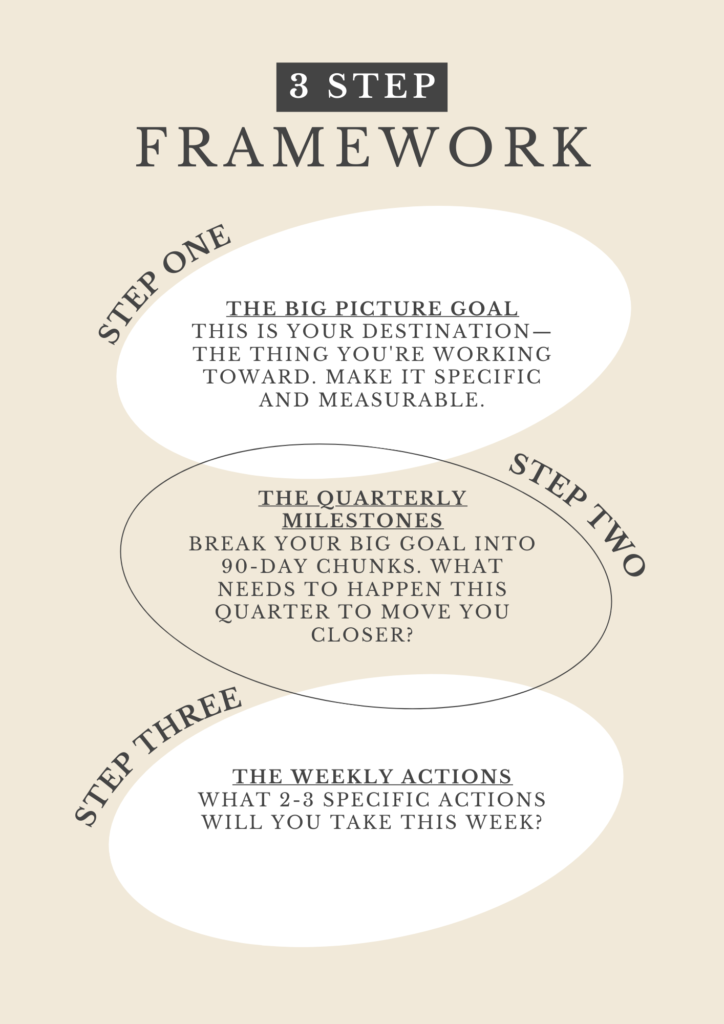
Here’s the goal planning framework I use, and it’s transformed how I approach everything from business building to stress management:
- The Big Picture Goal – This is your destination, the thing you’re working toward. Make it specific and measurable. Example: “Create a sustainable stress management practice that allows me to feel calm and energized most days.”
- The Quarterly Milestones – Break your big goal into 90-day chunks. What needs to happen this quarter to move you closer?Example: “Establish a daily 10-minute morning routine that includes breathwork and gentle movement.”
- The Weekly Actions – What 2-3 specific actions will you take THIS week? Example: “Monday/Wednesday/Friday: Practice 5-minute box breathing before getting out of bed.”
This three-tier approach to setting goals ensures you have both direction and actionable steps. The SMART goal framework supports this method, goals should be Specific, Measurable, Achievable, Relevant, and Time-bound.
Goal Setting Strategies for Midlife Success
Our midlife brains and bodies have different needs than they did in our twenties. Effective goal planning honors that reality. Here’s what works:
Build in buffer time. Don’t schedule goals back-to-back. Give yourself breathing room for the inevitable disruptions life throws our way.
Align with your energy patterns. Notice when you have the most mental and physical energy, and schedule important goal-related tasks during those windows. This is especially crucial when you’re managing stress or recovering from burnout.
Create accountability that feels supportive, not stressful. This might be a friend, a journal check-in with yourself, or a simple tracking app, whatever feels like encouragement rather than judgment.
Expect the restart. You’ll miss days. You’ll have off weeks. Successful goal setting isn’t about perfection, it’s about returning to your plan after disruptions without the shame spiral.
Common Goal Setting Mistakes to Avoid
Even with the best intentions, certain pitfalls can derail your goal planning efforts:
Setting too many goals at once. Focus on 2-3 major goals maximum. Quality over quantity creates better results.
Making goals too vague. “Be healthier” isn’t a goal—it’s a direction. “Walk 10,000 steps four days per week” is a goal.
Ignoring your why. Understanding why a goal matters to you increases your commitment when motivation wanes.
Skipping the planning stage. Remember: a goal without a plan is just a wish. Block time to map out your action steps.
Your Turn: From Wish to Achievable Goal
Take one resolution you’ve been thinking about for 2026. Now ask yourself these goal setting questions:
- What specifically do I want to accomplish?
- How will I know when I’ve achieved it?
- What’s one micro-goal I could start this week?
- What will I see/feel/experience when I’m successful?
- Why does this goal matter to me?
Write it down. Make it visual. Break it into tiny steps. And remember, a goal without a plan is just a wish, but a goal with even the smallest action step is progress.
Setting goals that honor where you are right now, not where you think you should be, is the key to sustainable change in midlife.
Frequently Asked Questions About Goal Setting
- What’s the difference between goals and resolutions? Resolutions are broad intentions to change, while goals are specific, measurable plans with actionable steps. Goal setting includes deadlines, milestones, and a clear roadmap for achievement.
- How many goals should I set at once? Focus on 2-3 major goals maximum. Setting too many goals dilutes your focus and energy, making it harder to achieve any of them successfully.
- What are micro-goals? Micro-goals are extremely small, specific actions that move you toward a larger goal. They’re designed to be so easy that you can’t fail, building momentum and confidence through consistent small wins.
- How do I stay motivated with goal setting? Connect your goals to your deeper values, track small wins, build in accountability, and review progress regularly. Visual reminders like vision boards also help maintain motivation.
- Can vision boards really help with achieving goals? Yes. Vision boards work by activating your brain’s reticular activating system, helping you notice opportunities and resources aligned with your goals. They’re most effective when placed where you’ll see them daily.
What goals are you setting for 2026? Drop a comment below, I’d love to hear what you’re working toward and support you in your goal planning journey.






Leave a Reply