
Thinning Hair in Midlife: Why It Happens and What Actually Helps
Affiliate Disclosure: This page contains affiliate links. If you purchase through my links, I may earn a commission at no extra cost to you. As an Amazon Associate I earn from qualifying purchases.
If you’ve noticed your ponytail feels thinner, your part seems wider, or you’re finding more hair in your brush than usual, you’re not alone. Hair thinning affects the majority of women as they move through midlife, and while it can feel distressing, there are practical steps that can make a real difference.
In this post, we’ll explore what causes hair thinning during this life stage and the solutions that actually work, not quick fixes or miracle cures, but realistic approaches backed by both science and lived experience.
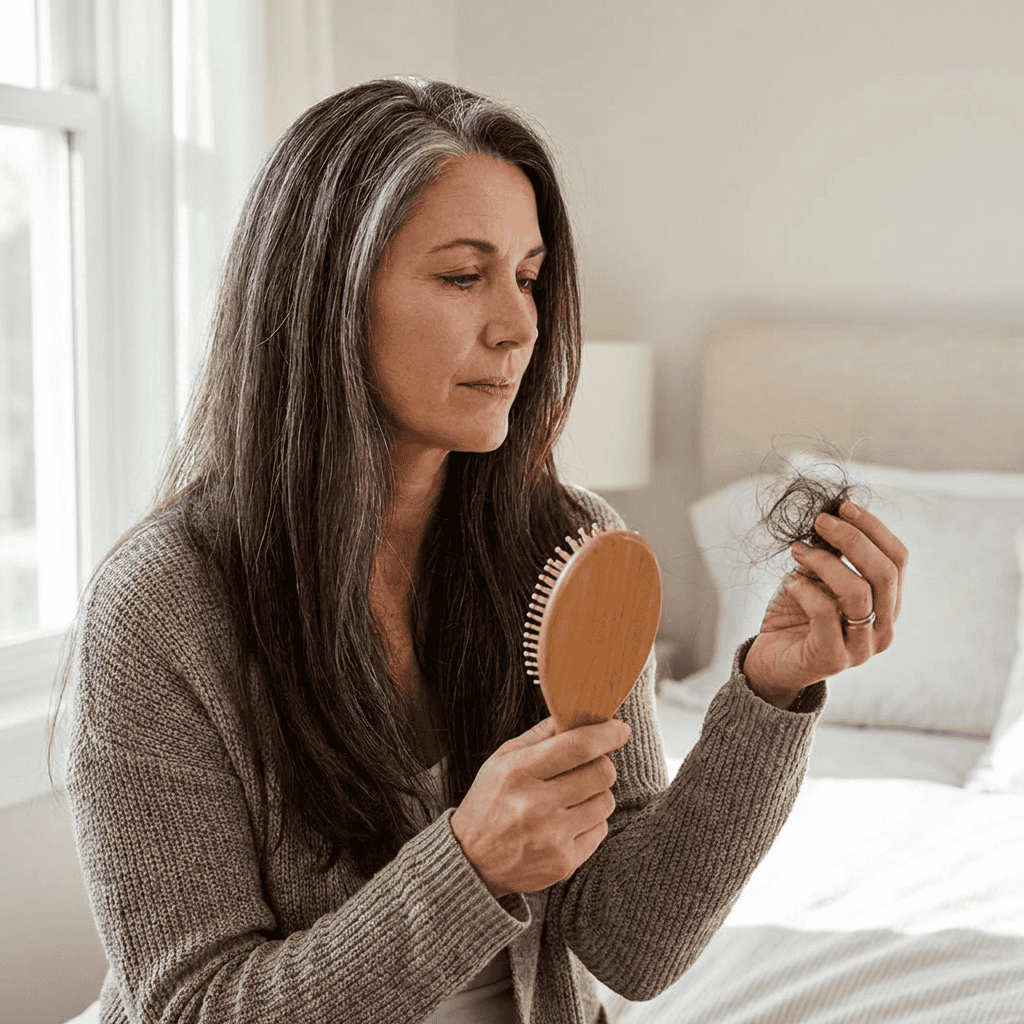
My Hair Story: From Constant Shedding to Finally Growing Long
Mine started in my late 30s. My hair would fall out in clumps after washing and brushing, and I couldn’t get it to grow past my shoulders no matter what I tried. I always assumed it was due to my underactive thyroid, but in reality, it could have been caused by early perimenopause, chronic stress, nutrient deficiencies, or a combination of all these factors.
It wasn’t until 2020, at age 50 during the pandemic isolation, that everything changed. Without needing to leave the house for work, I stopped styling my hair daily. No more hot tools, no more products, no more daily washing. I let it air dry, used my apple cider vinegar rinse regularly, and focused on gentle care. Within a year, I finally had the long hair I’d been wanting since my 30s. Now my hair reaches my waist, it’s still thinner than it was in my 20s, but it grows fast and stays healthy.
I’m sharing this not because my approach will work for everyone, but because it illustrates an important truth: hair thinning in midlife is rarely about one single cause, and the solutions often involve addressing multiple factors over time.
What Causes Hair Thinning as We Age?
Understanding why hair thins helps you make better decisions about how to address it. Here are the most common contributors:
Hormonal Changes
Perimenopause and menopause bring significant hormonal shifts. Estrogen and progesterone levels fluctuate and eventually decline, and these hormones play an important role in keeping hair in its growth phase longer.
When they drop:
- Hair grows more slowly
- More strands shift into the shedding phase at once
- New regrowth comes in finer
- Hair texture often changes (becoming dry, brittle, or frizzy)
At the same time, androgens (male hormones that women also produce) may become more dominant. This can contribute to female pattern hair loss, where hair thins primarily at the crown and along the part.
Thyroid Issues
Both hypothyroidism (underactive thyroid) and hyperthyroidism (overactive thyroid) can cause hair thinning. The thyroid regulates metabolism, and when it’s not functioning properly, hair growth cycles are disrupted. If you’re experiencing other symptoms like fatigue, weight changes, or temperature sensitivity along with hair loss, it’s worth getting your thyroid checked.
Nutritional Deficiencies
Midlife brings changes in nutrient absorption and dietary needs. Common deficiencies that affect hair health include:
- Iron – One of the most common causes of hair loss in women
- Vitamin D – Plays a role in hair follicle cycling
- B vitamins – Particularly B12, which supports healthy cell growth
- Protein – Hair is made of keratin, a protein structure
- Zinc – Supports tissue growth and repair
Chronic Stress
Stress doesn’t just affect your mood, it can literally shift hair follicles into a shedding phase. This is called telogen effluvium, and it typically shows up 2-3 months after a stressful event or period. Many women in midlife are juggling multiple stressors: aging parents, demanding careers, financial concerns, and significant life transitions.
Autoimmune Conditions
Conditions like alopecia areata, lupus, and other autoimmune disorders can cause hair loss. These often require medical diagnosis and treatment.
Medications
Certain medications commonly prescribed in midlife can contribute to thinning, including some blood pressure medications, antidepressants, and cholesterol-lowering drugs. Never stop a medication without consulting your doctor, but if you suspect a connection, it’s worth having that conversation.
Genetics
Female pattern hair loss (androgenetic alopecia) has a strong genetic component. If your mother or grandmother experienced thinning hair, you’re more likely to as well.
The bottom line: Hair thinning isn’t usually caused by just one thing. It’s often a combination of factors, which means addressing it effectively requires a multi-faceted approach.
What Hair Thinning Looks Like (and What’s Normal)
Hair thinning doesn’t always mean visible bald spots. Many women notice:
- A wider part, especially at the crown
- Less volume overall, particularly at the roots
- Ponytails that feel noticeably thinner
- Increased shedding in the shower, on your pillow, or in your brush
- Hair that won’t hold style or volume like it used to
- Changes in texture—hair becoming finer, dryer, or more brittle
Here’s what’s important to know: losing 50-100 hairs per day is completely normal. What matters more is whether you’re seeing consistent regrowth or noticing progressive thinning over time.
When to see a doctor: If you’re experiencing sudden or severe hair loss, hair falling out in patches, or hair loss accompanied by other symptoms (fatigue, weight changes, scalp issues), schedule an appointment. These could indicate an underlying condition that needs treatment.
What Actually Helps With Age-Related Hair Thinning
While there’s no overnight fix, there are evidence-based approaches and practical habits that can make a noticeable difference over time.
1. Scalp Health Comes First
Healthy hair growth starts with a healthy scalp. Product buildup, excess oil, dryness, and inflammation can all interfere with follicle function and worsen shedding.
Using a gentle clarifying treatment once or twice a week can be especially helpful if you use dry shampoo, styling products, or have hard water. One product I personally use and recommend is dpHue Apple Cide Vinegar Hair Rinse.
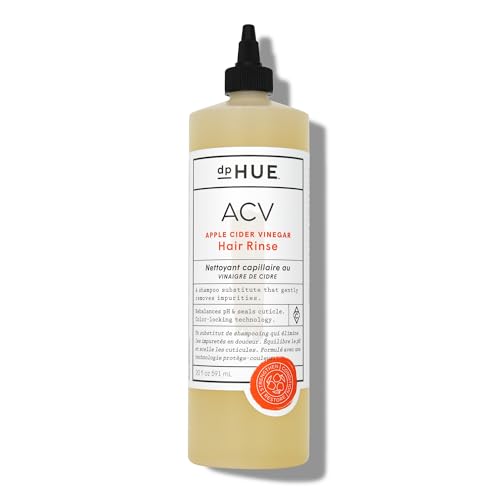
- Don’t Over Shampoo; Apple Cider Vinegar Hair Rinse removes impurities without stripping the natural oils that are essent…
- Post-Workout Rinse; Our formula is also a great post-workout refresh—gently removing sweat, oil, and buildup. Add ACV to…
- Help Soothe Your Scalp; Apple cider vinegar can help control scalp dryness and irritation. ACV Hair Rinse also incorpora…
I actually received this in a FabFitFun box back in 2018 and loved it so much I’ve continued using it. It’s an apple cider vinegar-based rinse with nourishing oils that cleanses, removes buildup, and moisturizes without stripping hair. Using it allowed me to reduce how often I washed my hair with shampoo. I went from washing daily to only 1-2 times per week with shampoo, using the ACV rinse the other 1-2 times. My hair never looked healthier.
Why it helps:
- Removes buildup without harsh sulfates
- Balances scalp pH, creating a healthier environment for hair growth
- Reduces scalp inflammation and irritation
- Helps hair feel lighter and fuller at the roots
2. Nutritional Support (When Appropriate)
Midlife hair often needs more internal support, especially if diet, absorption, or hormonal changes have affected nutrient levels.
After researching options, I decided to try a high-absorption biotin supplement and found Sports Research High Potency Biotin with Coconut Oil. The addition of coconut oil helps with absorption, which matters for fat-soluble vitamins.
Important considerations:
- Biotin isn’t a magic solution, and it’s not appropriate for everyone
- Always check with your healthcare provider first, especially if you have thyroid issues or take medications (biotin can interfere with certain lab tests)
- Results take time, typically 3-6 months of consistent use
- It works best when combined with overall good nutrition
If you’re considering supplements, getting blood work done first to check for actual deficiencies (iron, vitamin D, B12) is the smartest approach. Supplementing what your body actually needs is far more effective than taking things at random.
3. Reduce Breakage (This Matters More Than You Think)
A lot of what looks like “hair thinning” is actually breakage, not follicle-level hair loss. As hair becomes finer and more fragile with age, how you handle it matters more than ever.
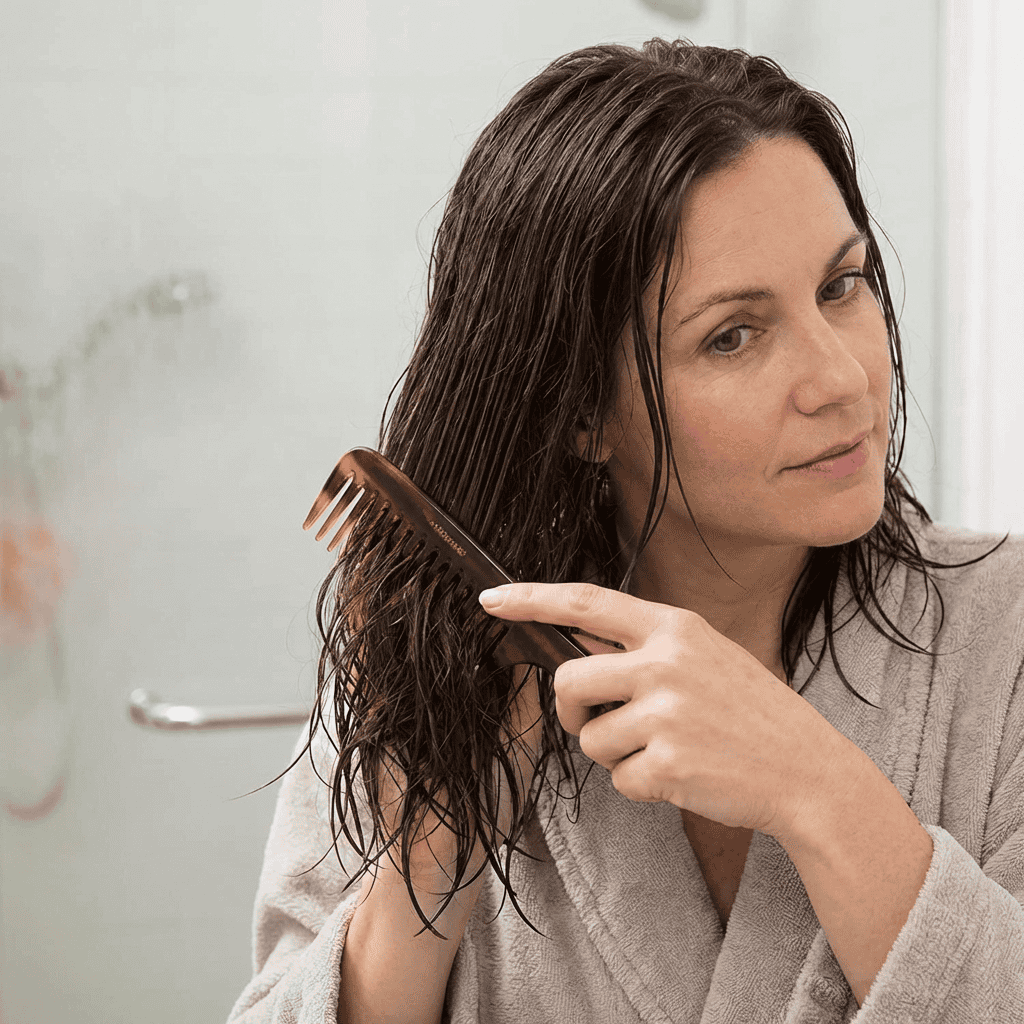
Finding a no-tangle, gentle brush became essential for me. I personally use L’Ange Hair Detangling Paddle Brush for Wet or Dry Hair because they’re designed to be gentler on fine or thinning hair, with flexible bristles that glide through without tearing.
I also discovered that my hair does significantly better when I rinse with cool or lukewarm water instead of hot. Hot water opens the hair cuticle, leading to moisture loss, frizz, and damage. Cool water helps seal the cuticle, making hair shinier, smoother, and better able to retain natural oils.
Small changes that help:
- Never brush wet hair aggressively – if you must detangle when wet, use a wide-tooth comb or wet brush and start from the ends
- Be extra gentle at the crown and hairline where hair is finest
- Avoid tight hairstyles that pull on the scalp (traction alopecia is real)
- Use silk or satin pillowcases to reduce friction while sleeping
- Skip the towel turban – it can cause breakage; instead, gently squeeze excess water with a microfiber towel or t-shirt
Protecting the hair you have is just as important as encouraging new growth.
4. Minimize Heat and Chemical Damage
This was the biggest game-changer for me. Before 2020, I washed my hair daily with shampoo, blow-dried it completely, then used hot tools to curl or straighten it. This required products like gel and hairspray. By the next day, my hair looked oily, dirty, and flat, so I’d wash it again. It was an exhausting cycle.
When I stopped needing to go to the office, I naturally did less with my hair. By using primarily the ACV rinse with minimal shampoo, avoiding styling products, and only partially drying my hair to prevent heat damage, everything changed. Within a year, I finally had the long hair I’d been wanting since my 30s.
Heat styling alternatives:
- Air dry whenever possible
- If you must use heat, always use a heat protectant and keep tools on the lowest effective setting
- Try heatless styling methods (braiding damp hair, foam rollers, etc.)
- Embrace your natural texture instead of fighting it
5. Consider Medical Treatments (With Professional Guidance)
For some women, over-the-counter and lifestyle approaches aren’t enough. Evidence-based medical treatments include:
- Minoxidil (Rogaine) – The only FDA-approved topical treatment for female pattern hair loss. It requires consistent use and takes 6-12 months to see results.
- Low-level laser therapy – Some devices show promise for stimulating follicles
- Platelet-rich plasma (PRP) injections – An emerging treatment with growing evidence
- Hormone replacement therapy – May help when hair loss is primarily driven by hormonal changes
These options should be discussed with a dermatologist or healthcare provider who can assess your specific situation.
What Usually Makes Hair Thinning Worse
If you’re dealing with thinning hair, these habits can unintentionally make things worse:
- Over-washing with harsh shampoos – Stripping natural oils forces your scalp to overproduce oil, leading to more frequent washing. Look for sulfate-free formulas designed for thinning or fine hair.
- Aggressive brushing or tight hairstyles – Constant tension on hair follicles can lead to permanent hair loss (traction alopecia). This includes tight ponytails, braids, buns, and extensions.
- Ignoring scalp health – An unhealthy scalp environment can’t support healthy hair growth. Address dandruff, inflammation, or excessive oiliness.
- Extreme dieting or under-eating – Crash diets and severe calorie restriction deprive your body of the nutrients needed for hair growth. Hair is non-essential tissue, so when resources are scarce, your body prioritizes vital organs over hair follicles.
- Chronic stress and poor sleep – Both trigger hormonal responses that can shift hair into shedding phases. Stress management isn’t just good for your mental health, it directly impacts your hair.
- Smoking – Reduces blood flow to hair follicles and accelerates aging of hair.
Hair health reflects what’s happening internally, not just what you put on it. This is why addressing root causes, whether that’s nutrition, stress, hormonal imbalance, or underlying health conditions, is so important.
Be Patient (Hair Regrowth Takes Time)
This is the hardest part, but also the most important truth: hair grows in cycles, and improvements often take 3-6 months to become noticeable. That doesn’t mean nothing is working, it means your body needs time.
The hair growth cycle has three phases:
- Anagen (growth phase) – Lasts 2-7 years
- Catagen (transition phase) – Lasts 2-3 weeks
- Telogen (resting/shedding phase) – Lasts 2-4 months
When you make changes, you’re affecting new growth, but you won’t see results until that hair emerges and grows long enough to be visible. This is why consistency matters more than perfection.
My Personal Recommendations
If you’re experiencing hair thinning in midlife, here’s what I suggest based on both research and personal experience:
- Get blood work done to rule out deficiencies and thyroid issues
- Use a clarifying rinse at least once a week to maintain scalp health
- Minimize heat styling and chemical treatments as much as possible
- Handle your hair gently, especially when wet
- Evaluate your stress levels and sleep quality, these impact everything
- Ensure you’re eating enough protein and nutrient-dense foods
- Be patient and consistent with whatever approach you choose
- See a dermatologist if thinning is severe or sudden
Remember, you don’t have to do everything at once. Pick one or two changes that feel manageable and build from there. Small, sustainable changes practiced consistently will always outperform dramatic overhauls that you can’t maintain.
Your hair may not look exactly like it did in your 20s, and that’s okay. The goal is healthy hair that you feel good about, whatever length, texture, or thickness that happens to be.
Have you noticed changes in your hair during midlife? What’s helped you? I’d love to hear your experience in the comments below.
Related Posts
- Understanding Insulin Resistance in Midlife
- Perimenopause & Menopause: The Symptoms No One Warns You About (And What to Do Next)
- Midlife Burnout: How to Recognize the Signs






Leave a Reply