
Loneliness in Midlife: Why It’s More Common Than You Think (And What Actually Helps)

If you’ve been feeling more alone lately, even when your life looks perfectly fine from the outside, you’re not imagining it. And you’re definitely not the only one.
Loneliness in midlife has quietly become one of the most widespread experiences of our generation. According to a recent AARP survey, 4 in 10 U.S. adults aged 45 and older now report feeling lonely, a significant increase from just a decade ago. AARP That’s not a small number. That’s millions of women navigating their 40s, 50s, and 60s feeling disconnected, even when their lives are full on paper.
And here’s the thing that really got my attention: in 2023, the U.S. Surgeon General declared loneliness a national epidemic, warning that lacking social connection carries health risks equivalent to smoking 15 cigarettes a day. Science of People
Fifteen cigarettes. A day. So if you’ve been quietly pushing that hollow, disconnected feeling aside, this post is for you. Let’s talk about why loneliness happens in midlife, why it matters more than most people realise, and most importantly—what you can actually do about it.
Why Midlife Is a Particularly Vulnerable Time for Loneliness
There’s rarely a single reason. It’s almost always a combination of life changes landing at once, and midlife happens to be the season when a lot of them converge.
Hormonal shifts play a bigger role than many of us expect. Perimenopause and menopause affect mood, energy, sleep, and emotional regulation—all of which can quietly pull you inward and away from others, even when that’s the last thing you actually need.
Life transitions hit hard in midlife, and some of the biggest ones can feel surprisingly isolating, even the good ones. Kids leaving home. Retirement (or thinking about it). Career changes, relationship shifts, losing a parent, relocating. Even when these changes are positive, they can strip away the social structures and routines that kept us connected without us even realising it.
Friendship drift is real and underacknowledged. People move. Get busy. Grow in different directions. The friendships that felt effortless in your 30s can quietly fade, and making new friends in midlife can feel awkward and strangely hard to admit you need.
The pandemic hangover hasn’t fully lifted for many people. Years of reduced social contact changed habits and comfort levels in ways that haven’t entirely bounced back. Research shows that adults in their 40s and 50s actually report higher rates of loneliness than those over 60 AARP—which tells us this isn’t just an “older age” problem. Midlife is right in the thick of it.
Why Loneliness in Midlife Is Worth Taking Seriously
This is more than just feeling a bit flat. Loneliness that lingers has real consequences for your physical and mental health, and most people don’t realise how significant they are.
Over time, chronic loneliness is linked to increased rates of depression and anxiety, lower energy and motivation, higher blood pressure, weakened immunity, and a reduced sense of purpose. It can also quietly reinforce itself—research shows that chronically lonely adults are more likely to cope through isolated activities like watching television or scrolling the internet, while those with stronger social connections tend to reach out to a friend or go out with family. (AARP) It’s a cycle that’s easy to slip into without noticing.
The good news, and there genuinely is good news—is that this is one of those things you can actively change. It doesn’t require a personality overhaul or a dramatic life shake-up. Small, intentional steps genuinely make a difference.
What Actually Helps: Practical Ways to Reconnect in Midlife
1. Give yourself permission to need connection
Before anything practical, do this. Many of us were raised to be self-sufficient, to not make a fuss, to assume others are busier or less lonely. So we don’t reach out. We wait. And the gap widens.
Recognizing that loneliness is a normal human experience, not a personal failing, is the first shift that makes everything else easier.
2. Start with who you already know
The easiest connection is often one you’ve already built. Is there someone you’ve been meaning to message for months? A friend you’ve lost touch with, or a family member you’ve drifted from?
Send the text. Keep it simple: “I was thinking about you, how are you doing?” You don’t need a reason. You just need to reach out first.
3. Try something regular and low-pressure
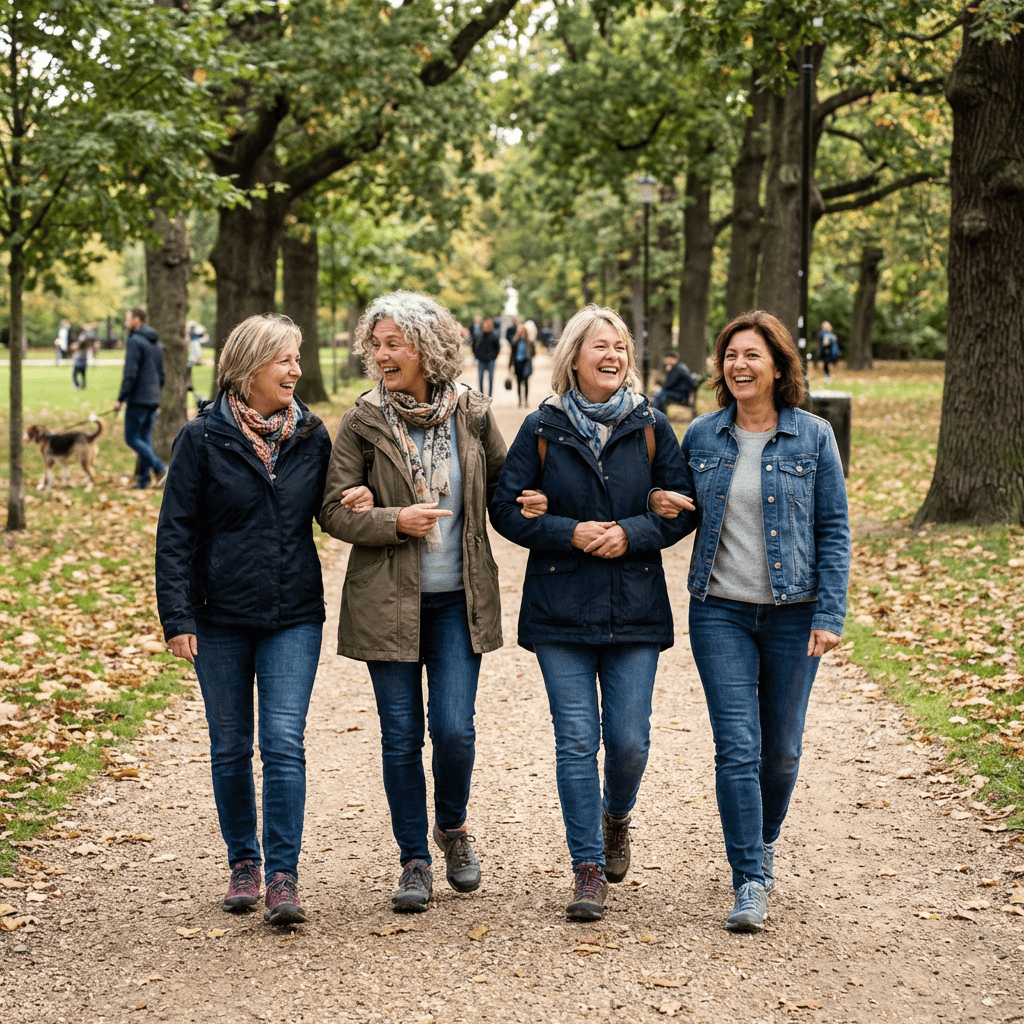
Connection tends to build through repeated, low-key contact more than through big social efforts. Think fitness classes, a walking group, a book club, a craft workshop—anything that gets you around the same people consistently. Familiarity naturally creates connection over time.
If in-person feels like a stretch right now, online communities can be a genuine starting point too. I’ve found some unexpectedly warm and real connections online—and I wasn’t expecting that at all when I started.
4. Consider volunteering or giving back
This one consistently comes up in research on loneliness and wellbeing, and I think it works because it shifts your focus outward at a time when loneliness tends to pull you inward. Studies find that adults who volunteer and participate in community activities are significantly less likely to report loneliness than those who don’t. AARP
Animal shelters, community centres, local charities—find something that aligns with what you care about. You’ll meet like-minded people without the pressure of it being a “social” occasion.
5. Learn something new
This might sound like an odd remedy for loneliness, but hear me out. Learning something new—a skill, a hobby, a creative pursuit, even an online business—opens doors to communities you wouldn’t otherwise find. It also quietly builds confidence, which matters more than we admit when social anxiety is part of what’s keeping us stuck.
For me, starting to build online has been unexpectedly connecting. I’m now part of conversations and communities that simply didn’t exist in my previous life.
6. Consider mentoring (in either direction)
Connection doesn’t have to be peer-to-peer. Seeking out someone a chapter ahead of you or offering your experience and perspective to someone earlier in their journey—creates genuine, purposeful relationships that feel different from casual socialising.
7. Don’t underestimate the value of professional support
If loneliness is tangled up with grief, anxiety, depression, or a major life change, talking to a therapist or counsellor can help enormously. There’s nothing weak about it, it’s actually one of the more direct routes through.
If access or cost is a concern, platforms like BetterHelp and Grow Therapy (which accepts insurance in the US) offer more flexible options than traditional in-person therapy.
What to Avoid When You’re Feeling Lonely
A few honest ones here, because they matter:
Don’t wait for connection to come to you. The life you want—the friendships, the belonging, the sense of being known—almost always requires making the first move. Even when it feels uncomfortable. Especially then.
Avoid the withdrawal spiral. The more you pull back, the harder it feels to re-enter. Even small, low-stakes interactions help maintain the bridge back to connection.
Be mindful of how you’re coping. It’s very human to reach for things that numb—extra alcohol, hours of scrolling, food, isolation. These might blunt the edges of loneliness in the short term, but they tend to deepen it over time. You deserve actual relief, not just distraction.
Keep moving. Not because exercise fixes everything, but because it genuinely affects mood, energy, and the confidence to show up in the world. Even a walk counts.
You’re Not Alone—Even When It Feels That Way
If you’re sitting with loneliness right now, I want you to know: something is not wrong with you.
You’re in a season of change. And loneliness, as painful as it is, is one of the clearest signals that you need and want deeper connection, which is one of the most human things there is.
The beautiful part about midlife—and I say this as someone who has genuinely surprised myself in this season—is that it’s also a time when you can intentionally build the connections you actually want, rather than just the ones you inherited or stumbled into.
One small step. That’s all it takes to start.
What’s one small thing you could do today to feel a little more connected? Send the text. Join the class. Show up somewhere. Your next connection is closer than you think.